There is a specific kind of exhaustion that comes not from doing too much, but from never quite stopping. You finish work. You close the laptop. You sit on the sofa with every intention of switching off. And then, almost immediately, your brain starts running through its unfinished business. The thing you meant to follow up on. The appointment you haven't booked. The reply you drafted in your head three days ago and still haven't sent.
You are technically resting. But it doesn't feel like it.
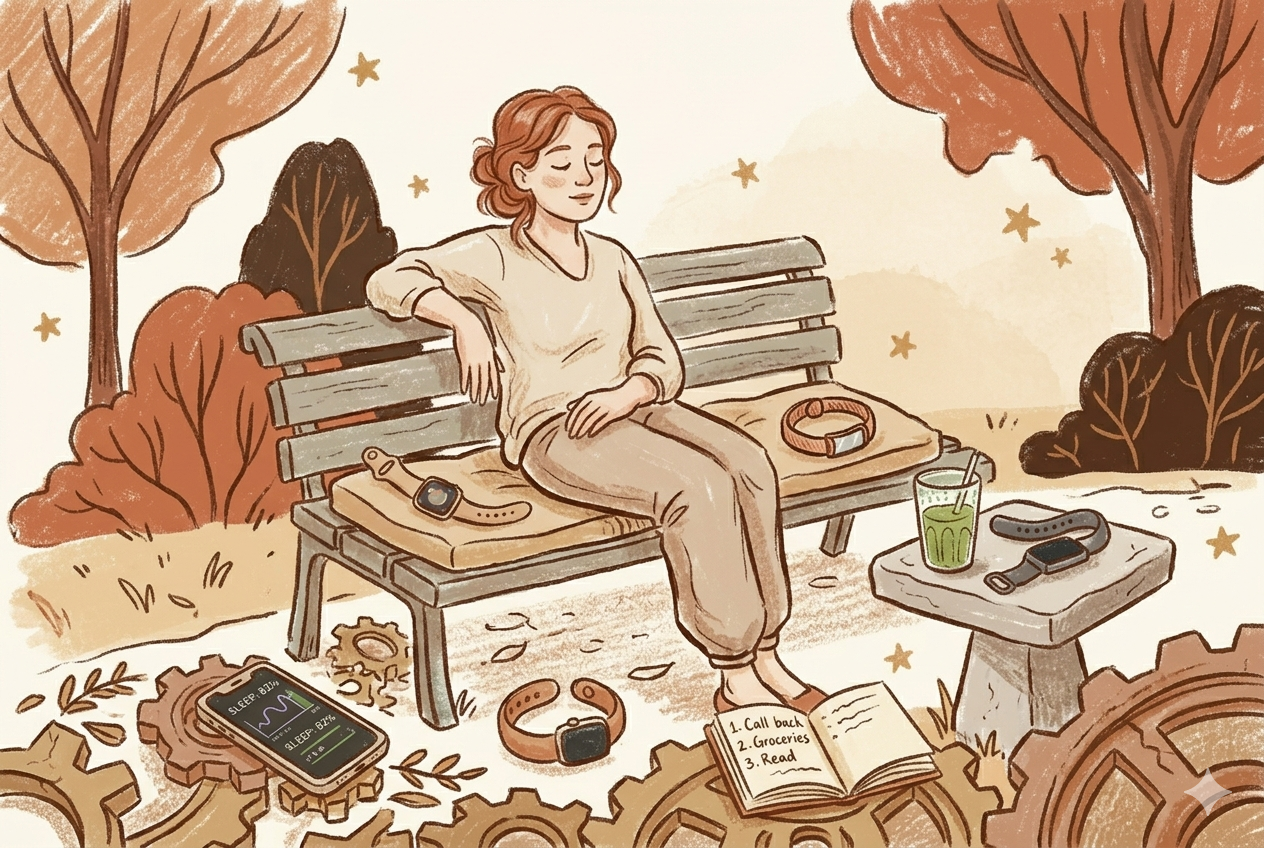
This experience is so common it has started to feel unremarkable. Just the texture of modern life. But there is quite a lot of research into why it happens, and the findings are worth knowing, because they suggest that the problem is not you. It is the environment your brain has been living in.
Two thirds of people feel like they don't get enough rest
In the world's largest survey on rest, the Rest Test, conducted by researchers at Durham University and completed by 18,000 people across 135 countries, two thirds of respondents said they didn't get enough of it. Not sleep, specifically. Rest. The feeling of having actually stopped.
What the researchers found interesting was that the problem wasn't usually time. Most people, when they looked at their lives objectively, had some free time. The issue was what happened to that time once it arrived. Rather than feeling restorative, rest had started to feel loaded. Guilty. Itchy. When people were asked to describe rest in a single word, many chose things like "dreamy" or "peaceful." But a significant number said "guilty." Or "fidgety." Or "annoying."
Two thirds of people feel like they don't get enough rest. The problem usually isn't time. It's what happens once free time arrives.
Rest, for a lot of people, has stopped feeling like a neutral state. It has started to feel like a rule you're breaking.
Busyness became a status symbol and rest became its opposite
There is a paper in the Journal of Consumer Research that describes something called the "conspicuous consumption of time." The idea is that where previous generations signalled status through what they owned, our generation has started signalling it through how busy they are. Being in demand means being important. Long hours are a badge. Rest, by implication, is what people do when nothing much is required of them.
This is relatively recent. Leisure used to signal wealth. Having time to spare meant you had resources. The shift toward busyness as aspiration has happened within a generation, accelerated by social media, hustle culture, and the particular mythology around high-achieving people who apparently never stop. The "that girl" content, the productivity influencers, the five-am club. All of it sending the same quiet message: the people getting ahead are not on the sofa right now.
Psychologists call the result "internalised productivity." The idea that your worth is tied to your output. And once that belief is in place, stopping starts to feel risky. Not just inconvenient. Actually risky. Like putting something valuable down in a public place and hoping it's still there when you come back.
Your brain is still at work, even when you aren't
Here is the more specific problem. Even when you do stop, even when you sit down with no particular plan, your brain doesn't necessarily get the memo.
Sophie Leroy, a researcher at the University of Washington, has spent years studying something she calls attention residue. The idea is straightforward: when you move from one task to another, part of your attention stays behind on the previous thing. It lingers. You're technically doing something else but your mind keeps drifting back, checking in, replaying. The residue doesn't clear quickly. It can persist for 20 minutes or more after you've nominally stopped.
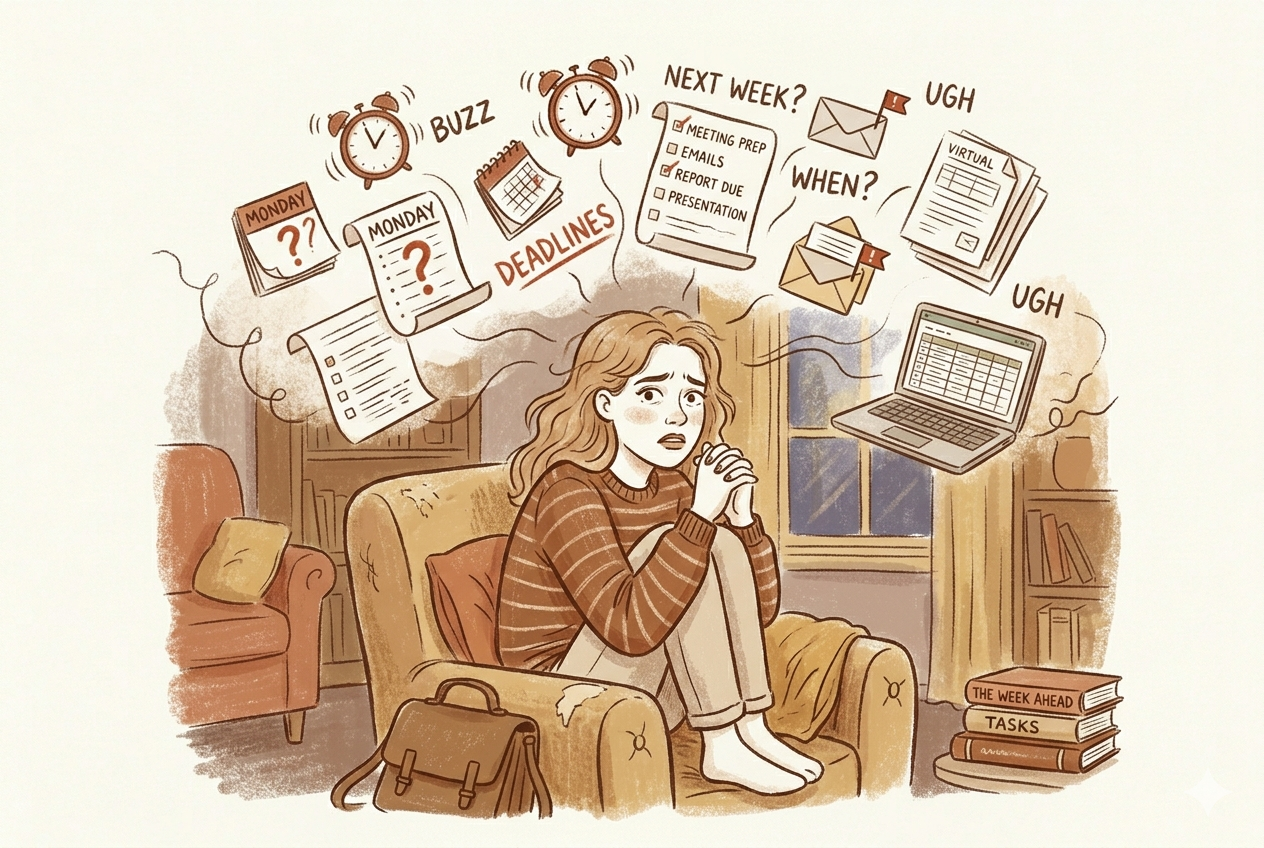
Now apply that to the end of a working day. You close the laptop but you have just come from a day of switching between tasks, messages, meetings, and decisions. Your brain is carrying residue from all of it. You sit down to watch television and the show is competing for attention with the mental review of everything that happened since 9am. The thing you said in that meeting. The thread you left open. The thing on tomorrow's list that you are quietly already pre-worrying about.
Stanford research found that employees who check work messages after hours have double the rate of attentional fatigue the following morning. Not just tiredness. Attentional fatigue. The brain's ability to focus has been depleted before the day has even started. The boundary between work and rest has become so porous that rest is no longer doing its job.
The phone is doing a lot of damage here
Americans now check their phones an average of 205 times per day. That is up 42% from the previous year. Among millennials the number is even higher, closer to 324 times daily in some studies. That works out to roughly once every three minutes across a waking day.
Each check is a small interruption. A micro-dose of stimulation that pulls the brain back into a state of monitoring and response, just as it was trying to settle. And the phone is specifically good at creating what researchers describe as a continuous partial attention state: the brain always slightly alert, always slightly waiting, never fully committed to whatever it is actually doing. Including resting.
The scroll has become the default response to a quiet moment. Sit down. Reach for the phone. Not necessarily because you want to, but because the habit is so ingrained that stillness now triggers the reach almost automatically. And every time that happens, genuine rest gets a little further away.
The scroll has become the default response to a quiet moment. Not because you want to, but because the habit is so ingrained that stillness now triggers the reach almost automatically.
The open loops are the real problem
Underneath all of this is something we have written about in these pages before: the Zeigarnik effect. The brain's tendency to keep unfinished business active in working memory, surfacing it repeatedly until it is resolved or captured somewhere safe.
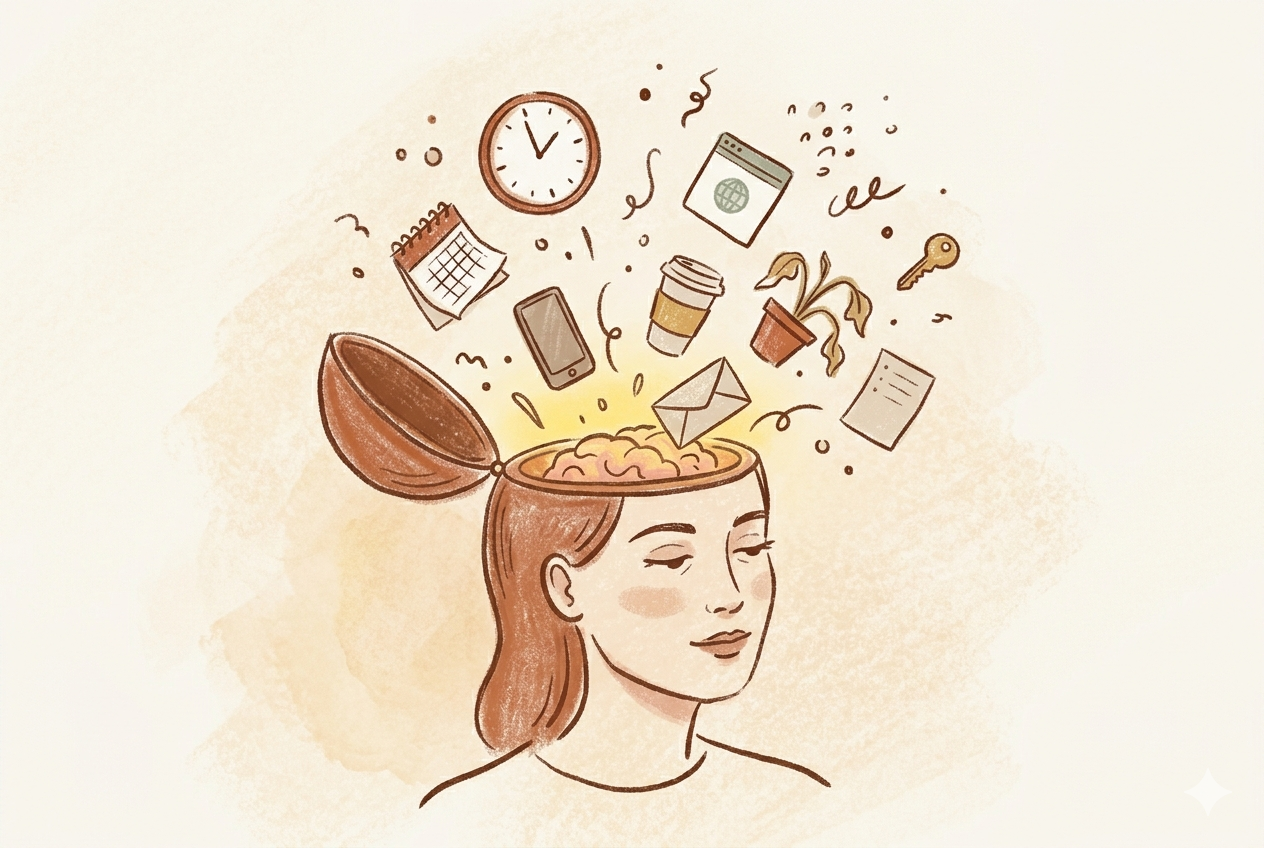
The reason rest so often doesn't feel restful is not just busyness guilt or phone habits or attention residue, though all of those contribute. It is that the brain is holding an active list of open loops. Things that are unresolved. Tasks that were thought of but not captured. Plans that were half-made. And your nervous system, doing exactly what it is designed to do, keeps pinging them back into consciousness just in case you've forgotten.
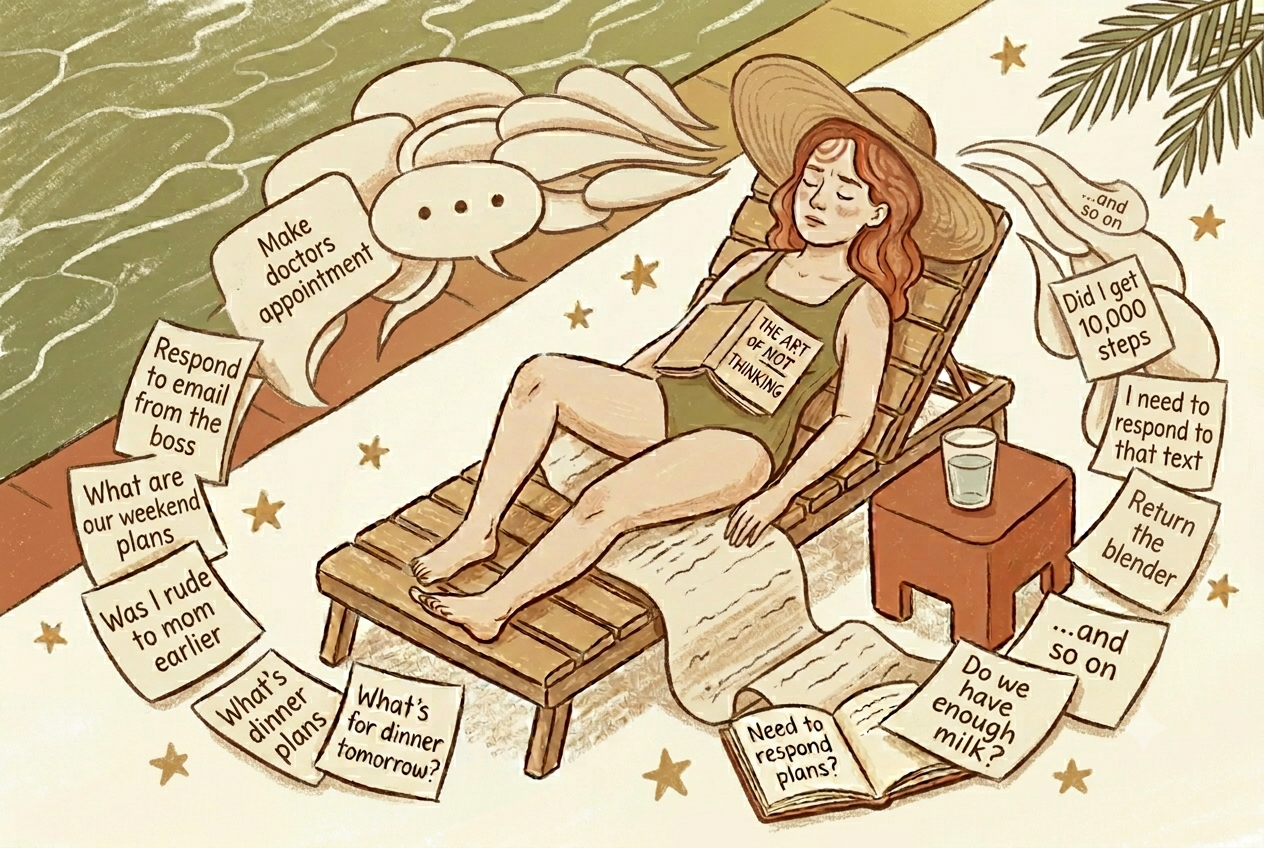
You cannot think your way to rest while your brain is actively trying to remind you of things. The two activities are competing for the same resource. And the list usually wins.
This is why "just relax" is such unhelpful advice. Relaxation is not a decision you can make while your working memory is busy. It requires the cognitive load to drop first. And for most people, in most evenings, it hasn't dropped because the things that were generating it were never put anywhere.
What actual rest requires
The Rest Test research found that the most restorative activities share a specific quality. They absorb attention just enough to distract from the mental chatter, without demanding the kind of effortful focus that depletes resources further. Walking, reading, listening to music, pottering. Activities where the mind can wander but isn't being actively managed.
This is also why the default mode network matters. When the brain is not focused on a task, this network activates and does something important: it consolidates memory, makes connections, processes emotion, and essentially tidies up. It is what happens when you stare out a window or let your mind drift in the shower and suddenly have a thought or a solution you weren't expecting. The brain, given a genuine gap, uses it.
The problem is that genuine gaps have become rare. The phone fills them. The mental list fills them. The background monitoring of everything that is unresolved fills them. The default mode network never quite gets its turn.
The transition moment matters more than you'd think
One thing the research points toward consistently: the moment of transition between work and rest matters enormously. Not what you do during rest, but what you do right before it.
People who feel their tasks are under control before they stop report significantly more restorative rest than those who stop mid-stream with things still actively unresolved. This is not about being on top of everything. It's about giving the brain a sense of closure, however partial. A handover. A "these things exist, they are safe, I don't need to hold them right now."
The specific format doesn't matter much. A written list. A voice note. Saying out loud, to no one in particular, what is still sitting there. The act of externalising creates what researchers call a "cognitive offload," and the brain, once it trusts that something is captured, tends to let go of it. The Zeigarnik effect works in reverse too. Getting something out of your head signals that it is no longer an open loop requiring active monitoring. The ping stops.
This is not a magic solution. It doesn't resolve the structural problems: the always-on culture, the busyness mythology, the phone in your hand. But it addresses the thing that is most immediately in the way. The mental list. The open loops. The things your brain is holding that it doesn't need to hold if they are somewhere safe.
Which is where Carry fits in
Carry was not designed to help you be more productive. We have said this before and it bears repeating. It was designed to help your brain let go.
The most natural time to use it is the transition moment: the end of the working day, or the Sunday evening before the week begins, or the 10 minutes before you try to sleep. Not to plan the next day or organise a project. Just to say what's there. The things that have been sitting at the back of your mind. The follow-up you need to make. The thing you keep nearly forgetting. Spoken out loud, captured, done.
It takes about two minutes. And the reason it helps with rest isn't complicated. Your brain is not great at resting while it is holding things. It is very good at resting when it trusts those things are somewhere safe. Carry is that somewhere. Not a to-do list. Not a productivity system. Just a place the list can live that isn't your head.
The rest you've been trying to get is probably not far away. It's just been waiting for the list to go somewhere first.