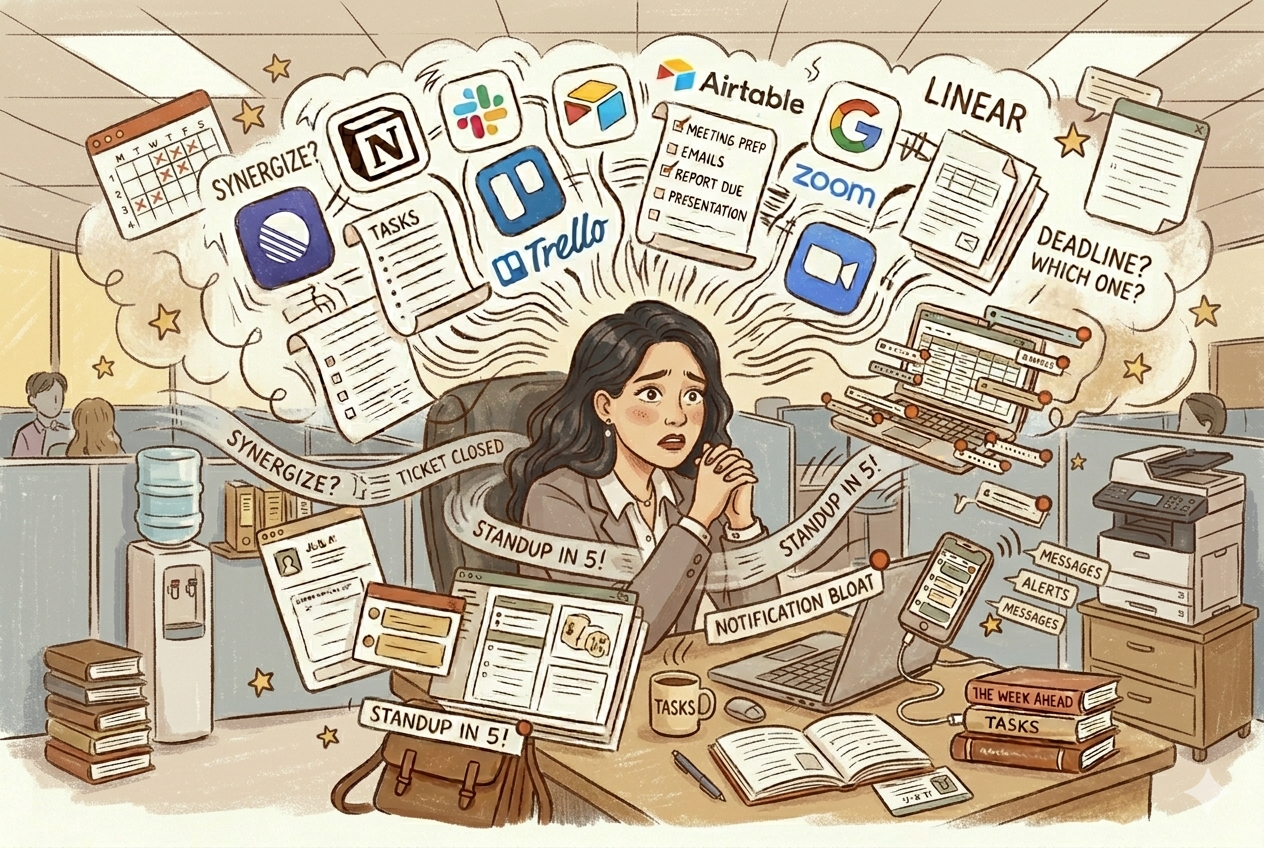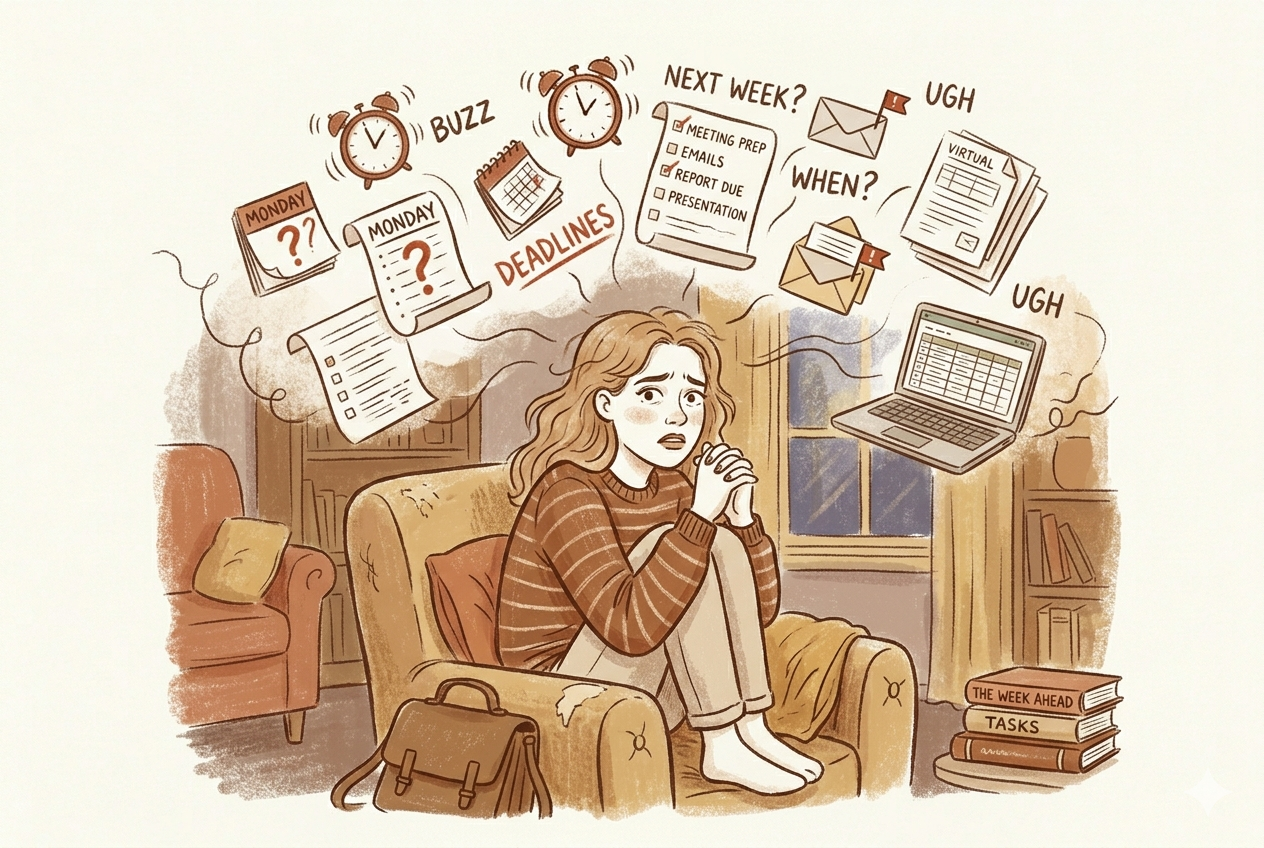
Sometime in late June, something shifts in the household. The school bag stays by the door unused. The morning routine dissolves. The children are home, wonderful and loud and needing things, and the day that was structured around their absence suddenly has to reorganise itself entirely around their presence.
For a lot of families, this is joyful. It is also, for working mothers in particular, quietly relentless. Because the summer holidays do not just mean six weeks of childcare to arrange and fund. They mean six weeks of compressed working hours, deferred meetings, guilt on both sides of every choice, and a particular kind of cognitive load that nobody really talks about because it has been normalised as just what motherhood looks like in summer.
It is not. It is a structural problem dressed up as a seasonal inconvenience. And the research behind it is more striking than most people realise.
The summer drop nobody mentions in the gender pay gap debate
Every summer, something measurable happens to women's workforce participation. Federal Reserve researchers Brendan Price and Melanie Wasserman documented it clearly: women's employment and hours worked fall consistently during the summer months, while men's participation does not move. Summer after summer. Year after year. A reliable, repeating dip that coincides precisely with school closures.
Their research is specific about the cause. It is not women choosing leisure. It is school-provided childcare disappearing for six weeks and the gap falling almost entirely on mothers to fill. Women sort into sectors that offer summer flexibility, like education, and take on reduced hours or lower-paid roles to accommodate the break. The flexibility costs them. Slower career advancement. Lower earnings. Compounding over years into a significant gap.
This is the summer drop. It barely features in mainstream conversations about the gender pay gap, which tend to focus on hiring, promotion, and salary negotiation. But it is there, recurring annually, quietly widening a gap that everyone agrees should be closing.
The heaviest single-year drop in recent memory: in the first six months of 2025, the labor force participation rate among women with children under five fell 2.8 percentage points. The largest six-month drop in 40 years. School closures, childcare costs, and the return-to-office push all contributing to women stepping back from work at a rate not seen since the 1980s.
The logistics nobody sees
Before any of the summer even begins, there is a planning operation. Camp registrations that open months in advance and fill within hours. Holiday childcare that costs, on average, 175 pounds per child per week in the UK, rising 4% year on year, totalling over 1,000 pounds for a six-week break. Activity schedules to coordinate between multiple children with different needs, ages, and interests. Grandparent availability to negotiate. Work schedules to adjust.
Most of this planning happens invisibly, carried by one person in the household, and research is consistent about which person that tends to be. A 2024 study from the University of Bath and the University of Melbourne, published in the Journal of Marriage and Family, found that mothers take on 71% of all household mental load tasks. Not 51%. Not just slightly more. Seventy-one percent, including 79% of daily tasks like childcare and scheduling.
Mothers earning more than $100,000 reported less childcare and housework than those with lower incomes. But they did no less mental household labour because of their status.
A follow-up study from the same research team, published in October 2025, added a finding that should give anyone pause. Even as women's careers and earnings rise, the unseen thinking work at home stays constant. Mothers earning more than $100,000 reported 30% less childcare and 17% less housework than those with lower incomes. But they did no less mental household labour because of their status. The cognitive load does not reduce when you earn more. It just gets carried in a different tax bracket.
The childcare gap is a policy failure, not a personal one
It is worth naming clearly: the summer childcare problem in both the UK and the US is not a problem that individual families should be solving individually. It is a structural gap in policy that falls disproportionately on mothers because the default assumption, embedded in how schools and workplaces are designed, is that someone at home will absorb the difference.
In the UK, government childcare funding applies during term time only. The holiday gap, thirteen weeks per year including summers, is left entirely to families. Coram Family and Childcare has been calling for funding to be extended to cover the holidays, noting that for many families the summer break is a source of dread rather than joy. In the US, the child tax credit expansion that briefly helped in 2021 was allowed to expire. The policy infrastructure simply does not match the reality of how modern families work.
The availability problem compounds the cost problem. Coram's research found shortages of holiday childcare places across local authorities, with the situation particularly acute for children with special educational needs. Securing a place is not just expensive. It requires planning weeks or months in advance, knowledge of what is available, and time to research and register. That research and registration is itself part of the mental load, invisible, unpaid, and almost entirely maternal.
Working from home made this better and worse simultaneously
Remote and hybrid work was supposed to help working mothers. In some ways it has. The flexibility to drop off and pick up without a commute, to attend school events without using annual leave, to work around a child's schedule rather than against it. Research published in 2025 found that companies offering family-friendly remote work reduce the financial and career penalties that mothers face in traditionally inflexible sectors like finance. 88% of working women surveyed described hybrid work as an equaliser in the workplace.
But summer reveals the limits of this. Working from home with children present is not a solution to childcare. It is two full-time demands occupying the same physical space. A 2024 study by the National Women's Law Center found that women working from home spend an average of 1.5 more hours daily on childcare than their pre-pandemic counterparts, while the equivalent figure for men shows no comparable increase.
Working from home with children present is not a solution to childcare. It is two full-time demands occupying the same physical space. Summer makes this visible in a way that the rest of the year quietly conceals.
Summer makes this visible in a way that the rest of the year quietly conceals. The child who can be at school during a morning meeting in October is home and needing attention in July. The work has not reduced. The childcare has not been arranged. Something has to give, and the research on what gives is depressingly consistent.

The invisible summer to-do list
Beyond the structural and the logistical, there is the daily texture of summer that adds to the cognitive load in ways that are harder to quantify but immediately recognisable to anyone who has lived them.
The activities that need to be planned so children do not dissolve into screens. The meals that now need to happen at lunchtime too. The social lives of children that require coordination with other parents. The referee role for sibling dynamics. The management of boredom, which is its own project. The guilt about working while they are home, and the guilt about not working enough, running simultaneously.
None of this appears on a professional to-do list. None of it is acknowledged in a performance review. And yet it is happening in the background of every working day throughout the summer, drawing from the same finite cognitive resource as everything else, and rarely drawing from anyone else's.
The research on this is clear even if the cultural conversation is not. The University of Bath researchers noted that their findings came as families prepared for school half term, traditionally a time when scheduling and logistical planning come to the fore. Summer is half term scaled to six weeks, without the structure of even a partial return to routine.
What the research says, and what it does not say
It is worth being careful here about what the data shows and what it does not. The mental load research is primarily drawn from heterosexual partnered households, and the researchers themselves acknowledge this. Single mothers, same-sex couples, and families with different arrangements will have different experiences. The picture is not uniform.
What is consistent across the research is that the cognitive labour of running family life, the planning, anticipating, coordinating, and remembering, tends to cluster with one person, and that person tends to be the mother. Whether that reflects internalised expectation, social conditioning, differential flexibility at work, or some combination of all three is a longer conversation. What matters practically is that the load is real, it is measurable, it is gendered, and summer concentrates it.
It is also worth saying plainly: this is not an argument that fathers do not contribute, or that all households operate this way, or that women are victims of their circumstances. It is an argument that a significant and documented imbalance exists, that it has real career and wellbeing consequences, and that naming it accurately is the first step toward doing anything about it.
Which is where Carry comes in
Carry was built for the gap between what your systems capture and what your brain is holding. In summer, that gap widens considerably for mothers. The term-time routine that externalises a lot of the planning disappears. The school app, the calendar, the work diary: these handle what they handle. They do not handle the mental arithmetic of who is where on which day, what needs to be bought, what needs to be booked, what was promised, what was forgotten, what needs to happen before September.
Getting that out of your head is not a cure for a structural problem. It does not fix the childcare gap or close the wage gap or redistribute the mental load between partners. But it does something real: it takes the weight of holding all of it, and puts it somewhere that is not your brain. Which matters, because a brain that is not spending energy holding the list has more capacity for everything else. The work. The presence. The actual summer.
The load is real. The imbalance is documented. And while the systems that created it take longer to change than one article, one app, or one conversation, the relief of putting it somewhere safe is available right now.